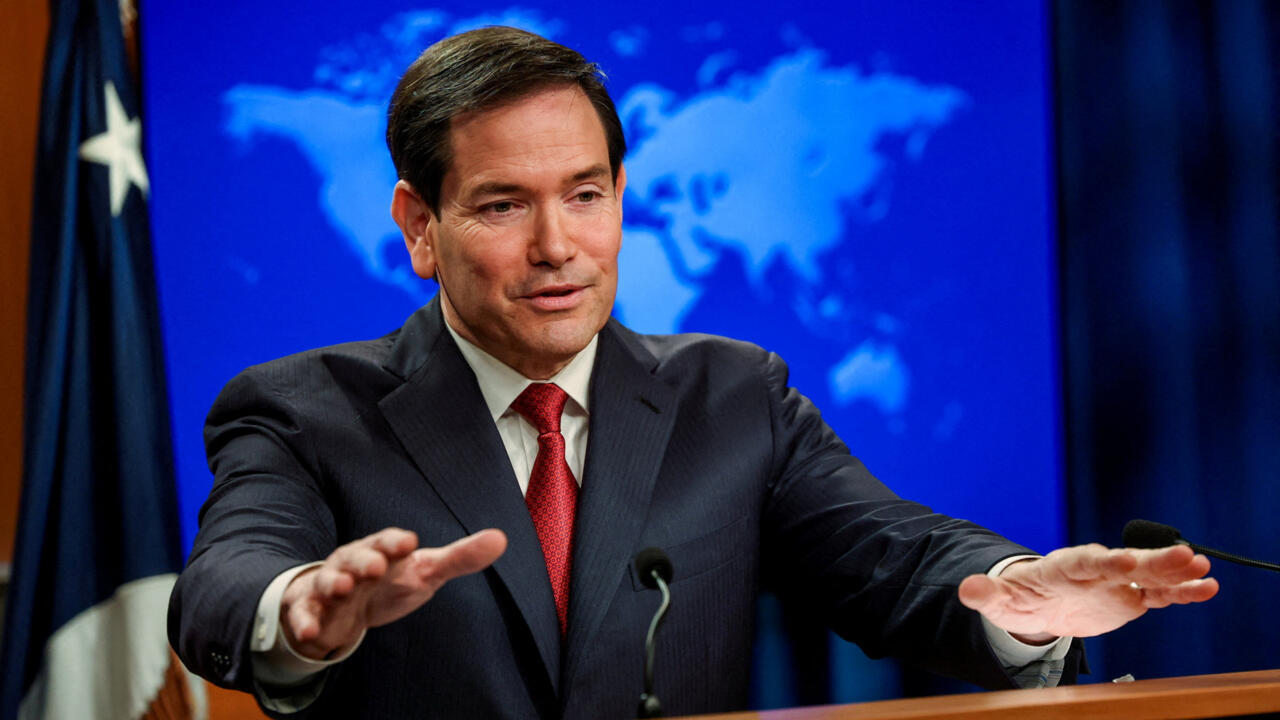
The United States is ready to meet Iran this week but discussions must cover its missile and nuclear programmes, Secretary of State Marco Rubio said Wednesday.
Talks between the countries amid fears of a military confrontation have been planned for Friday, with Iran pushing to restrict the negotiations to discussion of its long-running nuclear dispute with Western countries.
"If the Iranians want to meet, we’re ready," Rubio told reporters.
"They’ve expressed an interest in meeting and talking. If they change their mind, we’re fine with that too," he said.
"In order for talks to actually lead to something meaningful, they will have to include certain things, and that includes the range of their ballistic missiles, that includes their sponsorship of terrorist organisations across the region, that includes their nuclear programme and that includes the treatment of their own people," Rubio said.
A senior Iranian official, however, said the talks would only be about Iran’s nuclear programme, and that its missile programme was "off the table".
US President Donald Trump on Wednesday said Iran’s supreme leader Ayatollah Ali Khamenei should be "very worried," as Washington builds up its military forces in the region.
"I would say he should be very worried, yeah, he should be," Trump said in an interview with US broadcaster NBC News. "As you know, they are negotiating with us."
US agrees to move talks to Oman
The meeting was originally planned for Turkey, but Iranian Foreign Minister Abbas Araghchi on Wednesday said the talks would be held in Oman.
"Nuclear talks with the United States are scheduled to be held in Muscat on about 10 am Friday," said Araghchi in an X post, thanking Oman "for making all the necessary arrangements".
A US official confirmed that the venue had been shifted from Turkey to Iran. The agreement came after Arab leaders urged the US to hear out Tehran, a source told AP.
Iran wanted the meeting in Oman as a continuation of previous rounds of talks held in the Gulf Arab country on its nuclear programme and asked for a change of location from Turkey.
This was to avoid any expansion of the discussions to issues such as Tehran’s ballistic missiles, according to a regional official said.
The diplomatic efforts come after Trump’s threats of military action against Iran during its bloody crackdown on protesters last month and the deployment of more naval power to the Gulf.
Read more‘As in wartime’: Iranian doctors recount deadly crackdown on protesters
After Israel and the United States bombed the Islamic Republic last summer, renewed friction has kindled fears among regional states of a major conflagration that could rebound on them or cause long-term chaos in Iran.
Trump has continued to weigh the option of strikes on Iran, sources say. Oil prices have risen on the tension.
Nuclear dispute
Trump has warned that "bad things" would probably happen if a deal could not be reached, ratcheting up pressure on the Islamic Republic in a standoff that has led to mutual threats of air strikes.
Iran’s leadership is increasingly worried a US strike could break its grip on power by driving an already enraged public back onto the streets, according to six current and former Iranian officials.
Trump, who stopped short of carrying out threats to intervene during last month’s crackdown, has since demanded nuclear concessions from Iran, sending a flotilla to its coast.
Iran also hopes for an agreement that could help lift Western sanctions over its nuclear programme that have ravaged its economy – a major driver of last month’s unrest.
Ministers from several other countries in the region including Pakistan, Saudi Arabia, Qatar, Egypt and the United Arab Emirates had been expected to attend Friday’s talks, but a regional source told Reuters that Tehran wanted only bilateral talks with the US.
Ballistic missiles a key sticking point
Iranian sources told Reuters last week that Trump had demanded three conditions for the resumption of talks: zero enrichment of uranium in Iran, limits on Tehran’s ballistic missile programme and an end to its support for regional proxies.
Iran has long said all three demands are unacceptable infringements of its sovereignty, but two Iranian officials told Reuters its clerical rulers saw the ballistic missile programme, rather than uranium enrichment, as the bigger obstacle.
An Iranian official said there should not be preconditions for talks and that Iran was ready to show flexibility on uranium enrichment, which it says is for peaceful, not military purposes.
Since the US strikes in June, Tehran has said its uranium enrichment work has stopped.
In June, the United States struck Iranian nuclear targets, joining in at the close of a 12-day Israeli bombing campaign and Iran struck back at Israel with missiles and drones.
Iran said it replenished its missile stockpile after the war with Israel last year, warning it will unleash its missiles if its security is under threat.
Adding to tensions, on Tuesday the US military shot down an Iranian drone that "aggressively" approached the Abraham Lincoln aircraft carrier in the Arabian Sea, the US military said.
Read moreUS shoots down Iranian drone near aircraft carrier in Arabian Sea
In another incident in the Strait of Hormuz, the US Central Command said Iran’s Islamic Revolutionary Guard Corps forces had approached a US-flagged tanker at speed and threatened to board and seize it.
(FRANCE 24 with Reuters and AFP)